Brake Repair Cost Raleigh: Stop Turning a $150 Job Into $600
A squealing brake pad costs around $150 to fix. Wait until it grinds metal-on-metal into your rotor, and that same job runs $400–$650 — and that's before anyone mentions calipers.
TL;DR:
- Brake pad replacement in Raleigh typically runs $130–$200 per axle in 2026. Rotors add $150–$300 more per axle if you've waited too long.
- You don't always need rotors replaced — a good shop will measure rotor thickness before recommending resurfacing or replacement.
- A written estimate before any work begins is the fastest way to spot a shop padding the quote.
---
Why Brake Repair Cost Doubles When You Wait
Your brake pads are designed to squeal. That high-pitched noise when you first press the pedal is a wear indicator — a small metal tab built into the pad specifically to get your attention. At that point, the pad still has enough material to protect your rotor. A pad-only replacement on a typical sedan runs $130–$200 per axle in Raleigh in 2026.
Ignore the squeal and within a few hundred miles the pad wears past the indicator. Now you're hearing a grinding sound — metal backing plate dragging directly across the rotor surface. Every stop you make is cutting grooves into the rotor. Rotors that get scored below their minimum thickness spec can't be resurfaced; they have to be replaced. That pushes the total repair to $350–$650 per axle, depending on your vehicle's make, model, and rotor design.
Here's the math that makes it concrete: a 2020 Honda CR-V brake job at the pad-squeal stage runs roughly $160 (pads + labor, front axle). The same job after the grinding starts — new pads plus both front rotors — runs closer to $520. That's a $360 penalty for waiting about 1,000 miles.
And if your calipers are sticking because a slide pin seized from neglect? Add another $180–$300 per caliper. One deferred $160 job can cascade into a $900 repair on a single axle.
The takeaway: when your brakes squeal, that's the cheapest moment to fix them.
---
Pads vs. Rotors vs. Calipers: What You Actually Need
Not every brake job requires every component. Here's what each part does and when it actually needs to come out:
Brake Pads
The consumable in the system. Pads press against the rotor to create friction and stop the vehicle. They wear down over roughly 30,000–70,000 miles, depending on driving habits, vehicle weight, and pad compound. If you're doing a lot of stop-and-go driving on I-440 or US-1, expect the lower end of that range.
Replace when: pad thickness drops below 3mm, or the wear indicator starts squealing. At this point, rotors may still be fine.
Rotors
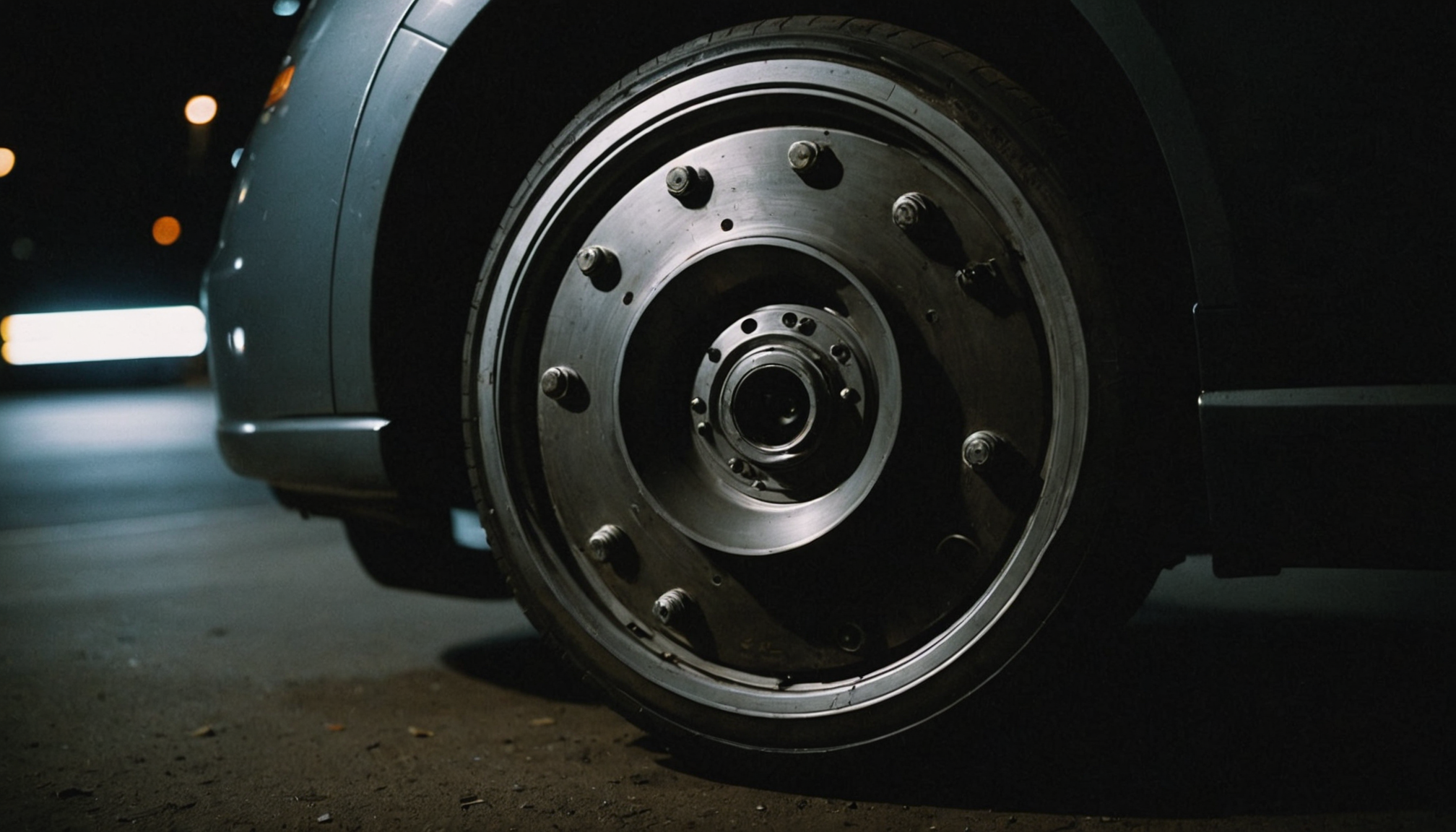
The metal disc the pads clamp against. Rotors wear too, but much more slowly than pads — typically lasting 50,000–80,000 miles under normal use. A legitimate shop will measure rotor thickness with a micrometer before recommending replacement. If the rotor is above minimum spec and not warped or deeply grooved, it doesn't need to come off.
Replace when: thickness is below the manufacturer's minimum spec, the surface has deep scoring from pad-to-metal contact, or the rotor is warped enough to cause pedal pulsation. Resurfacing (turning) is an option on thicker rotors, though most shops today replace rather than resurface because new rotors are inexpensive relative to lathe labor.
Red flag: a shop that recommends rotor replacement on a vehicle with 18,000 miles and no grinding history. That's almost never warranted — ask them to show you the micrometer reading.
Calipers
The hydraulic clamp that squeezes the pads against the rotor. Calipers last the life of most vehicles when maintained. The common failure mode is a seized slide pin, which causes the caliper to apply uneven pressure — leading to rapid pad wear on one side and a car that pulls to one side when braking.
Replace when: a caliper is leaking brake fluid, fully seized, or the piston won't retract. Not routinely — only when there's a documented failure. If you notice your car pulling to one side under braking, that's worth mentioning when you bring the vehicle in.
Speaking of pulling: if you've been noticing a drift while driving (not just under braking), that's a separate issue. Uneven tire wear and vehicle pulling can point to alignment — not always brakes — so it's worth ruling that out before approving brake caliper work.
---
How Raleigh Shops Price Brake Repair Differently
Brake repair cost in Raleigh varies more than most drivers expect — and the spread isn't always about quality. Here's what actually drives the price difference:
Parts tier: Shops source pads and rotors at different quality levels. Budget pads (economy/OEM-equivalent) run $25–$50 per axle wholesale. Premium ceramic pads, which last longer and produce less brake dust, run $60–$110. A shop that quotes you the cheapest number is usually installing economy parts. That's not fraud — but it's worth asking which tier they're using.
Labor rate: Raleigh independent shops typically bill at $90–$120/hour in 2026. Dealership service departments often run $130–$160/hour for the same work. Brake pad and rotor replacement on a standard front axle takes roughly 45–75 minutes. That labor spread alone accounts for $30–$60 of the price difference between a dealer and an independent shop.
"We recommend while we're in there" add-ons: Brake fluid flush, caliper slide pin lubrication, brake cleaner application — some of these are legitimate preventive services; some are margin items. A brake fluid flush every 2 years is genuinely recommended by most manufacturers. Caliper hardware kits (clips, shims) typically cost $8–$15 and are worth doing at pad replacement. Neither of those is padding. But a brake fluid flush on a car that had one done 14 months ago? That one you can push back on.
Before any work begins, ask for a written itemized estimate — parts cost, labor cost, and part numbers listed separately. That one step removes most of the ambiguity. If you're not sure what a fair written estimate looks like, this breakdown of what an honest auto repair estimate includes shows you exactly what should be on that paper before you sign anything.
---
The 60-Second Self-Check Before You Call Anyone
You don't need to be a mechanic to gather useful information before calling a shop. Run through this quickly:
1. What does it sound like? Squealing (metal tab on rotor) = pads are worn but rotors likely fine. Grinding (metal on metal) = pads are gone, rotors potentially damaged.
2. When does it happen? Noise only when first moving in the morning often clears as light surface rust burns off — normal. Noise on every stop = worn pads.
3. Does the pedal feel different? Soft or spongy pedal suggests a brake fluid issue or a failing master cylinder — different problem, higher urgency. Pulsating pedal on braking = warped rotor.
4. Is the car pulling to one side under braking? Yes = possible seized caliper or uneven pad wear. Note which side.
5. When were brakes last serviced? If you have the mileage, tell the shop. It helps them assess whether they're looking at normal wear or an accelerated wear problem.
Write down what you observe before you call. A shop that asks you these questions before quoting is working to give you an accurate number — not a lowball to get your car in the bay.
If you're also dealing with a warning light on the dash alongside the brake noise, knowing which dashboard codes can wait and which can't helps you prioritize what to bring up when you call.
---
What Fair Brake Repair Cost Looks Like in Raleigh
Here are the realistic price ranges for brake work at a reputable Raleigh independent shop in 2026. These are per axle (front or rear):
| Service | Typical Range (Raleigh, 2026) |
|---|---|
| Brake pad replacement only | $130 – $200 |
| Brake pad + rotor replacement | $280 – $480 |
| Caliper replacement (one side) | $180 – $320 |
| Full front brake job (pads + rotors + hardware) | $320 – $520 |
| Brake fluid flush | $80 – $120 |
A few anchoring examples for common Raleigh-area vehicles:
- 2019 Toyota Camry, front axle pads + rotors: ~$320–$380
- 2021 Ford F-150, front axle pads + rotors: ~$420–$520 (larger rotors, more labor)
- 2018 Honda Civic, front pads only (rotors still in spec): ~$140–$170
If a shop quotes you significantly above these ranges, ask them to show you the part numbers and explain the labor time. If they quote significantly below — especially on a four-wheel job — find out what parts tier they're using.
One more filter: ask whether the work carries a warranty. At Precision Auto, all brake repair is backed by a 24-month/24,000-mile warranty. A shop offering no warranty on brake work is a shop that isn't confident in what they're installing. If you're evaluating shops and want a quick way to compare how their warranties actually stack up, understanding auto repair warranty terms in Raleigh tells you what to look for before you sign off on any job.
---
Heard something from your brakes? Book a brake inspection at Precision Auto — call us or request your free written estimate at /contact. We'll measure your pad thickness and rotor spec while you wait, tell you exactly what needs replacing now versus what can wait, and give you the full itemized number before any work starts. No pressure. No guesswork.