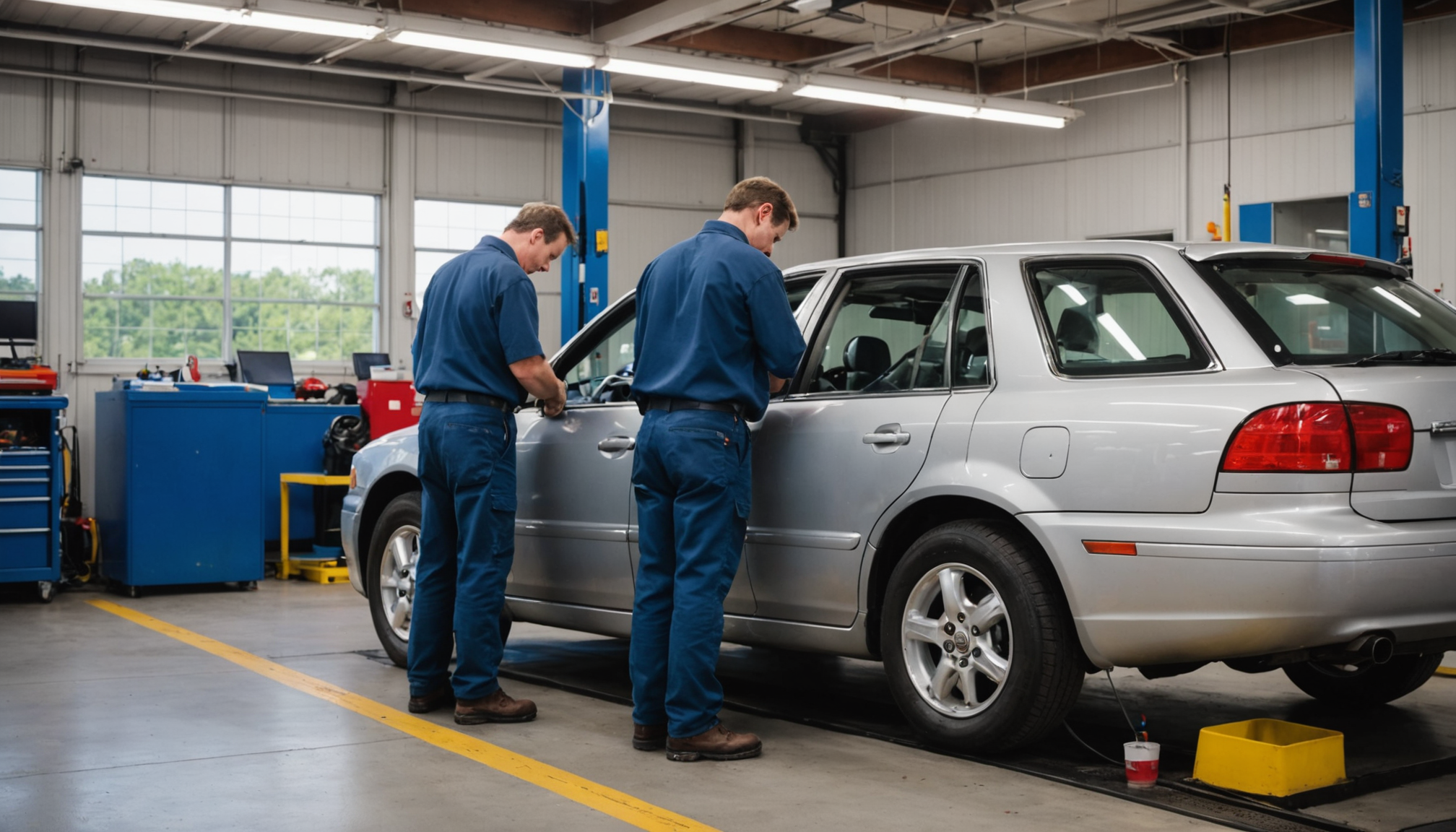
Why Your Car Fails NC State Inspection (And How to Pass the First Time)
Getting slapped with a failed inspection is one of the most frustrating — and avoidable — car ownership experiences. Your registration deadline is looming, you pull into the inspection lane confident, and 15 minutes later you're driving away with a rejection sticker and a to-do list.
The good news: most NC inspection failures come down to a handful of predictable issues. Know what inspectors look for, address small problems before they become failed-inspection problems, and you can walk out with a passing sticker every single time.
Here's everything you need to know about North Carolina state inspections in 2026 — what's checked, what causes failures, and exactly how to prepare.
---
What NC State Inspections Actually Cover
North Carolina combines two checks into one annual inspection: a safety inspection and an OBD emissions check (for most vehicles). Understanding both helps you know where to focus your prep.
The Safety Inspection
Every registered vehicle in NC — regardless of age — must pass the safety portion. An inspector will physically examine:
- Brakes — brake pedal feel, brake lights, and general brake system condition
- Tires — tread depth (minimum 2/32"), visible damage, and proper inflation
- Lights — headlights (high and low beam), taillights, brake lights, turn signals, reverse lights, and hazard lights
- Horn — must be functional
- Windshield wipers — must clear the windshield effectively
- Mirrors — at least two functioning mirrors required
- Steering and suspension — inspected for excessive play or obvious damage
- Seat belts — all belts must latch, retract, and function properly
- Glass — windshield cracks or damage that obstruct the driver's view
- Exhaust system — no leaks, no missing components
The OBD Emissions Check
If your vehicle is a 1996 model year or newer and is registered in one of NC's 48 emissions-regulated counties (which includes Wake County, where Raleigh sits), it must also pass an OBD-II plug-in emissions scan. The inspector plugs a diagnostic tool into your car's OBD-II port under the dash. This reads your vehicle's onboard computer for:
- Active check engine light (automatic failure)
- Stored diagnostic trouble codes (DTCs)
- Readiness monitors — these are the big one most people don't know about (more on this below)
Diesel vehicles, motorcycles, and vehicles 20+ model years old are generally exempt from the OBD emissions portion, though safety inspection still applies.
---
The Most Common Reasons Cars Fail NC Inspection
1. Check Engine Light Is On
This is the single most common emissions failure. If that amber check engine light is illuminated on your dash, you will not pass the OBD portion of the inspection — full stop. It doesn't matter if your car runs perfectly or if the code is for something minor.
The fix: have the code diagnosed before your inspection. Don't just clear the light with a code reader without addressing the underlying issue — the light will come back on, and clearing codes also resets your readiness monitors (see below).
If you're not sure what your check engine light means, getting a professional engine diagnostic is worth doing well before your inspection month arrives — catching small issues early is almost always cheaper than reactive repairs.
2. Incomplete OBD Readiness Monitors
This one surprises a lot of drivers. Your car's computer runs a series of self-tests — called readiness monitors — that verify everything from the oxygen sensors to the catalytic converter to the evaporative emissions system. After your battery is disconnected or codes are cleared, these monitors reset to "not ready."
If too many monitors show "not ready" when you pull in for inspection, you'll fail the emissions check even with no check engine light. NC allows a maximum of:
- 1 incomplete monitor on 1996–2000 model year vehicles
- 1 incomplete monitor on 2001 and newer vehicles (zero incompletes for some model years)
The fix: drive your car normally for 100–150 miles after any battery work or code clearing before going for inspection. This gives the monitors time to run and complete. Different monitors require different drive cycles — highway miles, city stop-and-go, and even letting the car sit overnight cold can all be necessary to complete certain monitors.
3. Tire Tread Below Minimum
Inspectors measure tread depth, and at 2/32" or less, your tires fail. An easy home check: stick a quarter into a tread groove with Washington's head pointing down. If you can see the top of his head, you're close to the limit. Switch to a penny for the absolute minimum — if you can see Lincoln's entire head, you're at or below 2/32" and it's time for new tires.
Don't wait for an inspection to discover worn tires. Balding tires significantly increase stopping distances — especially on wet Raleigh roads — which is a safety issue well before it becomes an inspection issue.
4. A Burned-Out Bulb
This is probably the most embarrassing failure because it's so easily preventable. One burned-out brake light, a dead turn signal, or a blown low-beam headlamp will fail the safety inspection immediately.
Walk around your car at night once a month and check all exterior lights. Have a friend stand behind the car while you press the brake pedal and cycle through your turn signals. It takes two minutes and costs nothing.
5. Worn or Streaking Wiper Blades
If your wipers skip, streak, or leave large unwiped areas, the inspector will fail your vehicle. In North Carolina, wiper blades take a beating from summer UV exposure — most should be replaced every 6–12 months. If you're noticing any smearing or noise when it rains, replace them before your inspection. Quality replacement blades typically run $15–$30 per blade and install in minutes.
6. Brake System Issues
Inspectors check that your brake pedal feels firm (not spongy), that your brake lights illuminate, and that there's no obvious brake system damage. If your parking brake doesn't hold, that's a failure too.
If your brakes have been making noise — grinding, squealing, or a pulsing pedal — get them inspected before your annual state inspection. Recognizing the early warning signs of brake problems can save you from both an inspection failure and a more expensive repair down the road.
---
How to Prepare for Your NC State Inspection (Step-by-Step)
You don't need to be a mechanic to show up prepared. Run through this checklist about two to three weeks before your inspection is due — that gives you time to fix anything that needs attention without the pressure of an expiring registration.
Two to Three Weeks Before
1. Check your dashboard — any warning lights on? Check engine, TPMS (tire pressure), ABS? Get them diagnosed.
2. Walk around the car at night — verify all exterior lights work: headlights (high and low), taillights, brake lights, turn signals, reverse lights, hazard lights.
3. Check tire tread and pressure — use the quarter test on all four tires. Check inflation with a gauge.
4. Test your wipers — run them with washer fluid. Any streaking or skipping? Replace the blades.
5. Test your horn — give it a quick tap in a safe location.
6. Check your seat belts — pull each one firmly. Does it catch? Does it retract?
7. Listen to your brakes — any squealing, grinding, or vibration when you stop?
One Week Before
- If your battery was recently replaced or disconnected for any reason, make sure you've driven at least 100–150 miles with a mix of highway and city driving to complete your OBD readiness monitors.
- Address any flagged issues from your walkthrough above.
- Consider a pre-inspection check at a trusted shop — many shops (including us) will take a look before your official inspection so there are no surprises.
Day of Inspection
- Bring your current vehicle registration.
- Make sure your gas tank is at least 1/4 full — some OBD readiness monitors won't run properly on a near-empty tank.
- Have your insurance information handy.
---
What Happens If You Fail?
In North Carolina, if you fail the safety inspection, you have 60 days to make repairs and return for a free re-inspection at the same station. If you fail the OBD emissions portion, you also get a free re-inspection within 60 days.
If you genuinely cannot afford the repairs needed to pass, NC does offer a waiver program for emissions failures — but it requires documented repair spending of at least $200 and a completed application through NCDMV. Waivers are not available for safety inspection failures.
---
Get Your Car Inspection-Ready at Precision Auto
At Precision Auto, we've been helping Raleigh drivers pass their NC state inspections since 2011. Our ASE-certified technicians can run a pre-inspection check, diagnose any check engine codes, and handle everything from a burned-out bulb to a full brake job — with upfront written estimates before any work begins and a 24-month/24,000-mile warranty on repairs.
Don't roll the dice on your inspection. Schedule an appointment or stop by — we'll make sure you're ready to pass the first time.